Performance Science Lab
Understanding the science and art of human performance
Our lab studies human performance and creativity in all its forms. We are particularly interested in how people learn to perform complex skills in high stakes environments, and how feedback and assessment support skill acquisition. We also explore how to optimize performance at the later stages of skill development. Much of our current work is focused on the education of health professionals, musicians and athletes.We bring an interdisciplinary approach to our research. Members of our lab are drawn from fields of study that span several different programs and departments, mostly (but not entirely) at McMaster University.Please note that we are not currently accepting any new undergraduate or graduate students. residents wishing to get involved in medical education research should use the contact form link above
some of our publications
current research
competency-based medical education
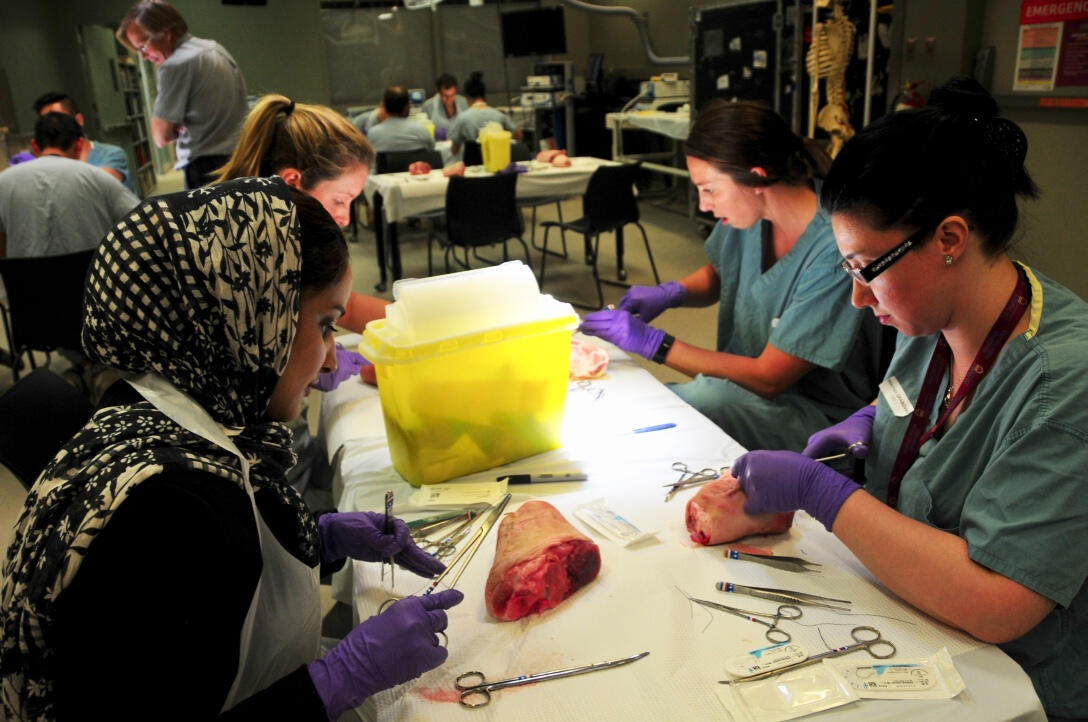
Competence by Design (CBD) represents a recent change initiative designed to improve medical training during residency. Through novel learning and assessment methods, the program promises better physicians and enhanced patient care. As the dominant training model in Canada, our lab is currently investigating its impact. Primarily, we are focused on its implementation in local residency programs.
Movement, Motor Control and Sensory feedback
Movement is often defined as a change in position or location. When purposeful and controlled, movement can advance technical performance, such as surgery. Within our lab, we develop new technologies and algorithms that track limb segments, hands, and instruments. We also explore the underlying processes that facilitate movement such as sensory feedback.
attention in education
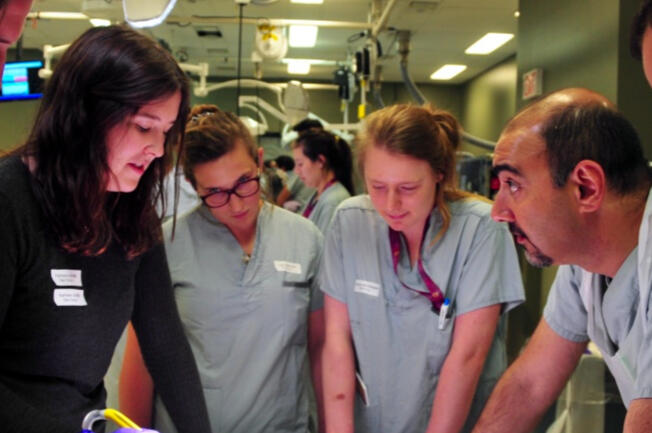
Classroom-based teaching sessions represent an important aspect of the postgraduate medical education curriculum, particularly as a variety of changes to the health care system have resulted in fewer clinical learning opportunities for trainees. student attention tends to decline when more passive teaching approaches are used and the duration of a task increases. very little research has been done to examine the role of mind wandering (i.e., task-unrelated thought) in professional education. We used McMaster's LIVELab to conduct the first study to measure mind wandering during teaching sessions in medical education using electroencephalography to help optimize the design and delivery of classroom-based teaching sessions in health professions education.
feedback and assessment in Sport and Surgery
We are developing and validating new methods of evaluating skill acquisition and learning in surgical trainees and elite athletes. We are also establishing indices of 'typical' performance. We are currently evaluating the effectiveness of these tools within orthopaedic surgery and other surgical training programs.More broadly, we are interested in understanding how assessment and feedback can be more effectively integrated into medical training. We are also intterested in evaluation fatigue, and improving assessment methods.
group decision making in medical education
Robust mechanisms to track resident progression through training are essential for postgraduate medical training programs transitioning to competency-based medical education. Competence committees are groups of faculty and occasionally residents tasked with guiding decision-making processes such as: promotion of residents to the next stage of learning; review, approval, and monitoring of individual learning plans; determination of residents’ readiness to write their licensing exams; and remediation for residents who are not progressing at a typical rate within their training program. We are currently using a variety of approaches, including interviews, naturalistic observation, and experimental research, to better understand how competence committees work together to make promotions decisions in postgraduate medical education.
machine learning in MEDICAL EDUCATION
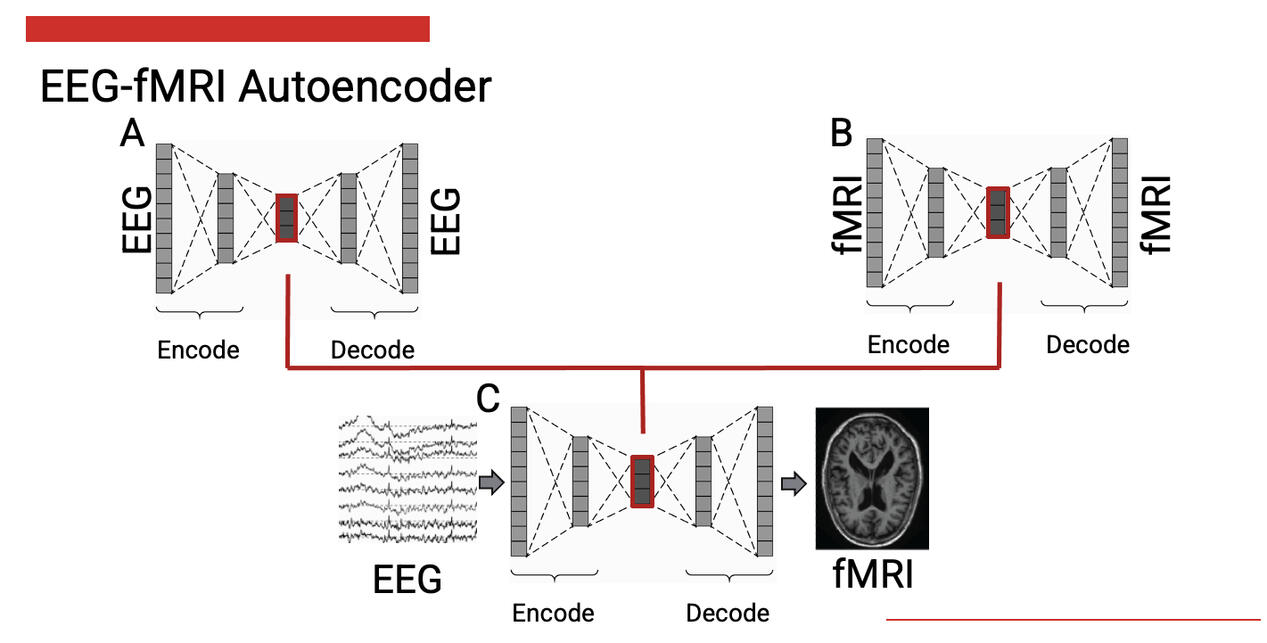
We are exploring ways to use machine learning to reduce error rates, and improve the way that surgical trainees are taught how to interpret diagnostic images.Interpreting medical images is a difficult task. In addition to there being natural variability between patients, some imaging modalities are subject to large variance in viewing angle, high levels of image artifacts, and generate large volumes of data that must be read by a radiologist for each case. These difficulties manifest in high diagnostic error rates. We are interested in addressing these issues by using machine learning to develop medical education tools for medical trainees. Our goal is to develop three types of automatic feedback for trainees: 1) Highlighting which parts of an image are the most important to pay attention to, 2) visualizing what the machine learning model sees when it breaks down an image to make a diagnosis, and 3) explaining the diagnostic decision by describing how the various clinical and visual features weigh against one another.
Music Cognition
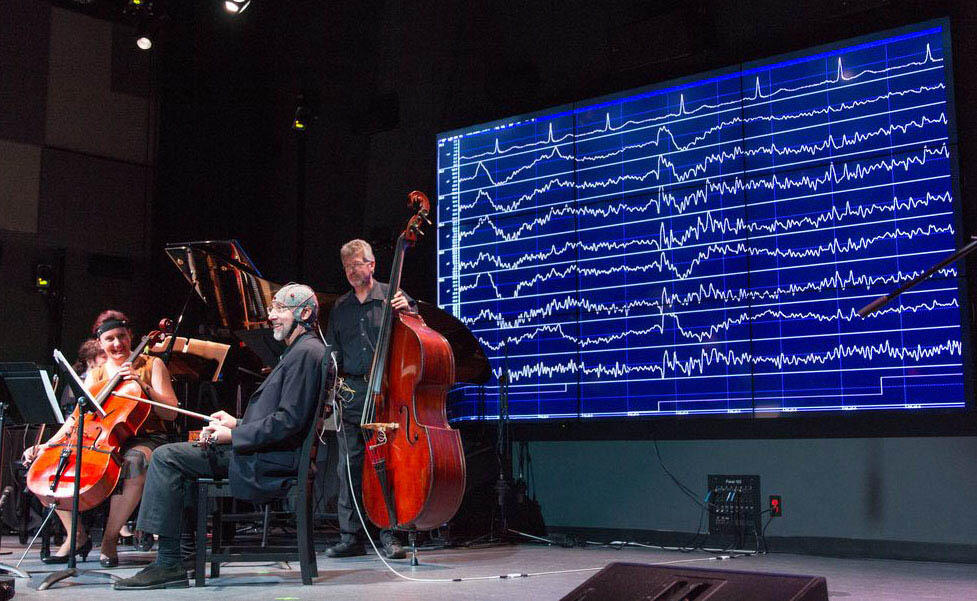
We are interested in various aspects of music cognition including pitch perception, how musicians learn to synchronise with each other, and how the acoustics of a performance venue change the way that musicians play. We also have a number of studies on the go that are looking at integrating technology in musical performances and exploring the relationship between performers and their audiences.More broadly, we are examining the neuroscience that underlies music perception, cognition, and performance.
Sound Design
We are working on various projects related to improving our understanding of the role of sound in creative performance. Some projects are taking place in the livelab where we are investigating various phenomena such as the impact of the acoustical space on audience engagement, the impact of the acoustical space on aspects of musical performance, the sonification of biosignals, and perception of auditory motion. Some of this work is being used to inform sound designs in several professional theatrical productions taking place in South West Ontario.
Contact us
please use this form to contact us.
note that we are not taking on any new students at the moment.
success!
thank you for your message. someone will be in touch with you soon.